Packing for a safari in Kenya means preparing for cool early-morning game drives, warmer afternoons, changing weather and, on some itineraries, strict luggage limits on small aircraft. The right Kenya safari packing list depends on where you’re going, when you’re travelling, how long you’ll be away and whether your itinerary includes domestic flights.
You don’t need a separate outfit for every day. Many safari camps and lodges offer laundry services, although availability and charges vary. A few versatile clothing layers, comfortable shoes, sun protection, and essential personal items will cover most game drives. The most important step is to check your itinerary’s baggage rules before deciding which bag to use.
Kenya Safari Packing List: The Essentials
Use this checklist as a starting point, then adjust it to your travel dates, destinations, and accommodation.
Clothing and Footwear
- Lightweight, breathable shirts and T-shirts
- Long-sleeved shirts for sun protection and cooler mornings
- Comfortable trousers or lightweight hiking trousers
- A warm fleece, sweater or light insulated jacket
- A lightweight rain jacket, particularly during rainy periods
- Comfortable closed-toe shoes or trainers
- Sandals or comfortable shoes for relaxing at camp
- Underwear and socks
- Sleepwear
- Swimwear if your accommodation has a pool or your itinerary includes a beach stay
- A wide-brimmed hat or cap
Sun and Insect Protection
- Sunscreen
- Sunglasses
- Lip balm with sun protection
- Insect repellent
- After-sun lotion or moisturiser, if needed
Game-Drive Essentials
- Binoculars
- Camera, lenses and memory cards, if you use them
- A lens blower and microfiber cloth if you’re bringing a camera with interchangeable lenses
- A small daypack
- Reusable water bottle
- Phone and charging cable
- A buff, bandana or lightweight scarf to help keep dust off your face
- Small torch or headlamp; a red-light mode may be useful at camps after dark
- Lightweight layer to keep within reach during early-morning drives
Health and Personal Items
- Personal prescription medicines in their original packaging
- Basic first-aid supplies and any familiar over-the-counter remedies you may need
- Oral rehydration salts and suitable diarrhoea relief, if recommended for you by a clinician or pharmacist
- Antihistamine, if appropriate for you
- Lubricating eye drops if you are prone to dry or dusty eyes or wear contact lenses
- Hand sanitiser
- Personal toiletries
- Contact lenses, glasses and spare supplies, if applicable
- Tissues
- Travel insurance details and emergency contacts
Documents and Electronics
- Passport and any required entry authorisation
- Flight tickets and safari itinerary
- Travel insurance documents
- A saved offline copy and printed backup of your approved Kenya electronic travel authorisation (eTA), where applicable
- Yellow fever vaccination certificate, if required for your route
- Bank cards and some suitable backup payment options
- Clean, undamaged US dollar notes if you plan to carry cash; check current acceptance rules with your bank or exchange provider
- Phone, charger and power bank
- Plug adapter suitable for Kenya
- Camera battery charger and spare batteries
- Copies of important travel documents, stored securely
Keep essential medicines, travel documents, valuables and anything you cannot easily replace in your hand luggage, subject to the airline’s rules. If you are taking a domestic safari flight, remember that the aircraft operator may impose a smaller total baggage allowance than your international airline.
Save your approved eTA and other important documents offline, and carry a printed backup in case you cannot access your phone. Check the current entry requirements for your nationality and route before departure. A yellow fever vaccination certificate is required in some circumstances, including certain arrivals from countries with yellow fever transmission risk. Verify whether the requirement applies to your journey, including relevant transit stops.
What Clothes to Wear on Safari in Kenya
Safari clothing needs to work across different temperatures and activities. You may leave camp before sunrise, spend several hours in an open vehicle and return during the warmer part of the day. Dressing in layers is more useful than packing several heavy outfits.
Here are some tips to keep in mind:
Choose lightweight, neutral-coloured clothing
Khaki, olive, beige, brown and other muted colours are practical choices for game drives. Lightweight fabrics that breathe and dry quickly are useful in warm weather, while long sleeves and trousers provide additional protection from the sun and insects.
You do not need to buy a complete safari wardrobe. Comfortable outdoor clothing you already own is usually sufficient for ordinary vehicle-based game drives.
Dark blue and black may attract tsetse flies in some areas, so consider other colours where these flies are present. Bright white clothing can show dust quickly, although you do not need to avoid it for fear of frightening wildlife.
Avoid wearing camouflage or clothing that could be mistaken for military attire. Camouflage clothing is restricted in Kenya, so choose ordinary civilian outdoor wear instead.
Pack a Warm Layer for Early-Morning Game Drives
Even when daytime temperatures are warm, mornings can feel chilly, particularly in open safari vehicles and higher-altitude destinations. A fleece, sweater, or light jacket that you can remove as the day warms up is worth packing.
This is particularly relevant for early departures in the Maasai Mara National Reserve, Amboseli National Park and Laikipia, where morning temperatures can be noticeably cooler than afternoon conditions.
Bring Comfortable Shoes
For standard game drives, comfortable closed-toe shoes or trainers are generally adequate. You usually do not need heavy hiking boots simply to sit in a safari vehicle.
If your itinerary includes guided bush walks, hiking or other activities on foot, check the operator’s requirements. Those activities may call for sturdier footwear, depending on the terrain and distance.
Adjust your Clothing to Your Itinerary
A safari combined with a beach stay on the Kenyan coast requires different clothing from a trip spent entirely in the highlands or wildlife reserves. Pack swimwear and lighter coastal clothing if you will be visiting the coast, but keep a warm layer for cooler inland mornings.
For a longer safari, check whether your camps provide laundry. If laundry is available during your stay, you may be able to rotate a smaller selection of clothing instead of packing a complete outfit for every day.
What to Pack for Kenya’s Dry, Rainy and Cooler Seasons
Kenya’s weather varies by region, altitude, and time of year. Coastal areas are generally warm and humid, while central highlands and higher-altitude conservancies can be cooler, especially in the early morning and evening. Wildlife reserves may have warm days and chilly game-drive starts, so pack for the conditions you expect at each stop.
During the Drier Months
Pack breathable clothing, comfortable walking shoes, sun protection, and a fleece or lightweight jacket for early-morning game drives. Dust can be noticeable on unpaved roads, so choose clothes that are easy to wash.
A buff, bandana or lightweight scarf can help keep dust off your face during dusty drives. If you are bringing a camera, carry a protective bag and use a blower or suitable lens-cleaning tools to remove dust carefully. Keep your warm layer accessible for early starts, even when daytime temperatures are expected to be high.
During the Rainy Seasons
Kenya’s long rains commonly occur around March to May, while the short rains generally fall around October to December. Timing and intensity vary by region and year, so check forecasts for your destinations before departure.
Pack a lightweight waterproof jacket, quick-drying clothing, and shoes with good grip. A waterproof cover or protective bag can help keep your camera and other electronics dry. You may not need heavy rain gear for the entire trip, but having a light layer ready is useful when showers are forecast. Keep a spare pair of socks in your day bag in case your feet get wet.
For Cooler Highland Destinations
If your itinerary includes the central highlands, higher-altitude conservancies or mountain areas, bring warmer clothing than you would for a trip limited to lower-lying reserves. A fleece or insulated jacket, long trousers and warm socks can make early mornings and evenings more comfortable.
When your safari covers several regions, pack layers that you can add or remove as temperatures change. Use the coldest conditions you reasonably expect on your itinerary to guide your choices, while keeping lighter clothing for warmer afternoons and coastal stays.
What Is the Baggage Allowance for Kenya Safari Flights?
The baggage allowance for Kenya safari flights is around 15 kg per person on fly-in safaris, with soft-sided bags often required. The exact limit depends on the airline, route, and aircraft, so check the baggage rules for your itinerary before packing.
Like many safari operators in Kenya, we apply a 15 kg per person baggage limit in soft-sided bags on several of our fly-in safari packages. For example, our 7-Day Amboseli, Meru & Masai Mara Fly-In Safari and 7-Day Samburu, Laikipia & Masai Mara Photographers Fly-In Safari both have this restriction. If you’re joining us on one of these trips, pack within the stated limit and check your itinerary for any additional baggage rules.
Your international flight may allow you to bring more luggage than your domestic safari flight. Don’t assume the allowance on your international ticket will apply when you transfer to a smaller aircraft for the journey to your camp.
Why Do Safari Flights Require Soft-Sided Bags?
Small safari aircraft have limited space for luggage, and large rigid suitcases may not fit into their baggage compartments. Soft-sided duffel bags are easier to fit into these spaces, which is why some operators require them.
Before you pack, check these details with us or your airline:
- Weight allowance: How many kilograms you can bring per person.
- Bag type and dimensions: Whether you need a soft-sided bag and what size restrictions apply.
- Hand luggage: Whether your cabin bag and personal items count towards your allowance.
- Camera equipment: Whether your camera and camera bag count towards the weight limit.
- Excess baggage: Whether you can bring extra luggage, how to arrange it, and whether additional charges apply.
- Luggage storage: Whether you can leave items you won’t need during your safari at an approved location.
How Should You Pack for a Weight-Restricted Safari Flight?
Start with the clothes and equipment you’ll actually need for your itinerary. Choose versatile clothing you can layer and wear for different activities, keep toiletries compact, and leave out items your accommodation confirms it provides.
Weigh your packed bag at home, including the bag itself. Check its dimensions, too. Even if your luggage is within the weight limit, it may be too large for the aircraft’s baggage compartment.
If you’re taking several domestic flights during your safari, check the restrictions for each one. The allowance on one flight may differ from the next, so don’t assume that a bag accepted by one operator will automatically be accepted by another.
Can You Store Extra Luggage Before a Kenya Safari?
If you’re spending time in Nairobi before or after your safari, you may be able to leave a larger suitcase behind and travel to the reserves with a smaller bag. Ask us or your hotel whether luggage storage is available and where you can leave your belongings.
Before relying on this option, confirm any storage charges, access arrangements and collection times. Availability varies by provider and location, so arrange storage in advance rather than assuming it will be available when you arrive.
Electronics and Photography Equipment
You do not need expensive photography equipment to enjoy a Kenya safari. A phone can capture memorable moments, while a camera with a suitable zoom lens can help photograph wildlife from a distance. Choose equipment that fits your interests and baggage allowance.
What to Bring
- Binoculars: Useful for observing birds and wildlife at a distance. Confirm whether your operator or accommodation provides them if you do not have your own.
- Camera and lenses: Bring the equipment you know how to use, along with sufficient memory cards.
- Lens blower and microfiber cloth: Useful for removing dust from camera equipment and cleaning lenses carefully. Avoid rubbing dry grit across a lens.
- Spare batteries: Useful during long game drives, particularly if you take many photographs.
- Chargers and cables: Keep them together in a small pouch.
- Power bank: Useful when you are away from a reliable charging point, subject to airline restrictions on carrying and storing batteries.
- Plug adapter: Check the plug type required by your devices and the sockets available at your accommodation.
- Protective case or bag: Helps keep dust and light rain away from electronics.
Kenya generally uses Type G electrical sockets and a 240 V supply. Check the input range printed on your chargers before plugging them in, and use a suitable adapter. An adapter changes the plug connection; it does not automatically convert voltage.
Check Charging Arrangements at Your Camp
Power availability varies between safari properties. Some accommodations provide charging points in rooms or communal areas, while others may have limited hours or arrangements for charging devices. Ask your camp or lodge what is available before deciding how many batteries or power accessories to bring.
If you use a power bank, keep it accessible and follow the airline’s rules for spare lithium batteries and portable chargers. Do not pack restricted batteries in checked luggage where the airline requires them to be carried in the cabin.
A headlamp can also be useful for moving around a camp after dark, especially where paths between tents and shared facilities are not brightly lit. A red-light mode is an optional feature that may be useful in some settings, but follow your camp’s guidance on lighting around wildlife.
Medication, Toiletries and Health Essentials
Bring enough of your regular medication for the trip, with a reasonable allowance for travel delays. Keep prescription medicines in their original packaging and carry relevant prescriptions or supporting documentation where appropriate. Check any rules that apply to the medicines you are travelling with, especially if your journey involves multiple countries.
A compact personal health kit may include:
- Your regular prescription medicines.
- Plasters and basic first-aid supplies.
- Familiar remedies for minor issues, where suitable for you.
- Oral rehydration salts, which can help replace fluids and electrolytes if you become dehydrated.
- Diarrhoea relief, if suitable for you and recommended by a clinician or pharmacist.
- An antihistamine, if appropriate for your needs.
- Insect repellent.
- Sunscreen and lip balm with sun protection.
- Hand sanitiser.
- Personal hygiene products.
- Lubricating eye drops if you are prone to dry or dusty eyes.
- Glasses, contact lenses and any lens-care supplies you normally use.
Do not rely on a safari camp having your preferred brand or a particular medicine in stock. Remote properties may be some distance from a pharmacy or medical facility.
Get Destination-Specific Health Advice Before Travelling
Health precautions depend on your itinerary, medical history and the places you plan to visit. Speak with a qualified travel-health professional well before departure about recommended vaccinations, malaria prevention and any other precautions relevant to your trip.
Malaria prevention may include prescribed medication, depending on your destinations and personal circumstances. Do not choose a preventive medicine without professional advice. Ask your clinician or pharmacist whether you should carry oral rehydration salts, diarrhoea relief or antihistamines, and check that any medicine is suitable for you.
Dust can irritate eyes on some game drives. If you wear contact lenses or are prone to dry eyes, consider packing suitable lubricating eye drops and your usual lens-care supplies.
Keep travel insurance details and emergency contact information accessible. If you have a medical condition that requires particular supplies or storage arrangements, confirm what you need with your healthcare professional and your accommodation before travelling.
What Do Safari Lodges in Kenya Provide?
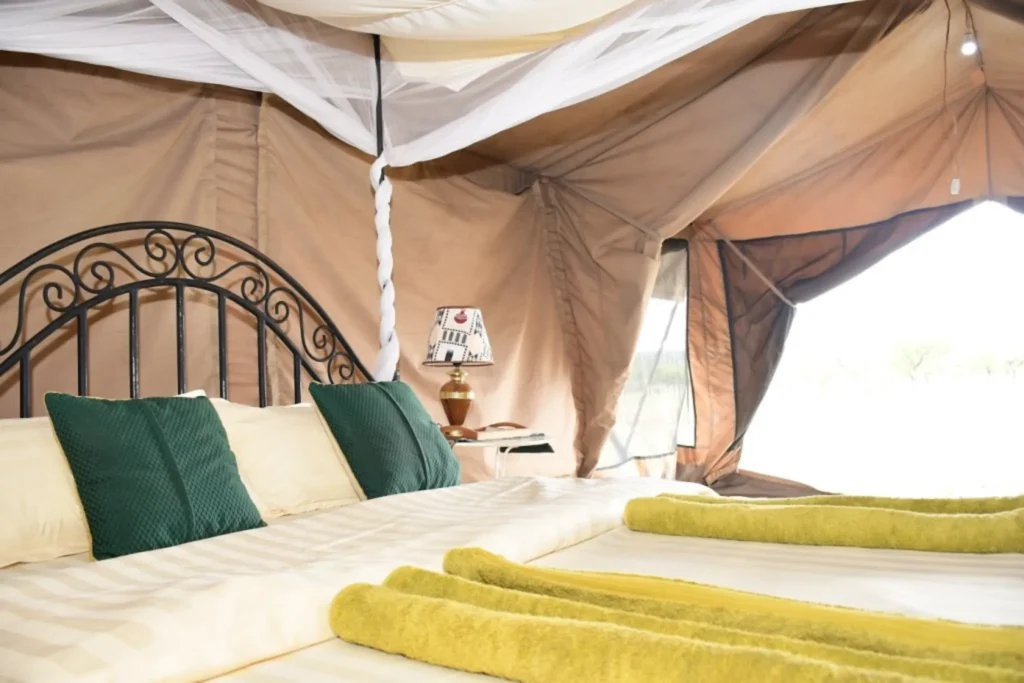
Safari lodges and camps in Kenya often provide towels, toiletries, drinking water, laundry services and other amenities, but what is included varies by property. Check with your accommodation before packing so you know what to bring and what you can leave behind.
| Item or Service | What to Check Before Packing |
| Towels and toiletries | Ask whether towels, soap, shampoo, and other toiletries are provided. |
| Hairdryer | Confirm availability if you need one. |
| Laundry | Check whether laundry is offered, how much it costs and how long it takes. |
| Drinking water | Ask whether drinking water is supplied and whether you can refill a reusable bottle. |
| Charging points | Check where you can charge devices and whether electricity is available throughout the day. |
| Binoculars | Ask whether binoculars are available or whether you should bring your own. |
| Mosquito nets | Check the sleeping arrangements if you are concerned about mosquito protection. |
Laundry can help you pack fewer clothes for a longer safari, provided the service is available and fits your schedule and budget. Some properties charge extra, and turnaround times may vary.
Before departure, review your accommodation details or ask us what is available at the properties in your itinerary. This helps you avoid packing unnecessary items while ensuring you bring essentials that may not be provided.
What Not to Pack for a Kenya Safari
Knowing what to leave behind can help you save space, reduce your luggage weight, and meet the baggage restrictions on domestic safari flights.
- Large hard-shell suitcases for restricted light-aircraft flights: Some operators require soft-sided bags because of limited baggage-compartment space. Check your airline’s rules before choosing your luggage.
- Too many outfits: If your accommodation offers laundry services, you may be able to reuse clothes during your trip. Confirm the availability, cost and turnaround time before packing less.
- Heavy footwear you won’t use: Comfortable closed shoes are generally suitable for vehicle-based game drives. Bring hiking boots or specialist footwear if your planned activities require them.
- Full-size toiletries you don’t need: Check whether your accommodation supplies basic toiletries, then pack travel-sized alternatives where practical.
- Single-use plastic carrier bags: Kenya restricts plastic carrier bags, and separate restrictions apply to certain single-use plastics in protected areas. Reusable cloth bags and suitable reusable pouches are practical alternatives. Check the current rules for your destinations.
- Duplicate electronics and accessories: Pack the chargers, batteries and accessories you need rather than carrying unnecessary spares.
- Camouflage clothing: Choose ordinary civilian clothing instead. Civilian use of camouflage clothing is restricted in Kenya.
- Items prohibited by airline or local rules: Check the requirements for batteries, drones and other specialised equipment before departure.
Don’t leave essential items behind simply because you expect your camp to provide them. Confirm what’s included, particularly for medication, personal-care products and specialist equipment.
Reusable pouches can help organise toiletries, cables and small electronics. Avoid plastic carrier bags, and check any additional restrictions that apply to your flights and destinations.
Your Final Kenya Safari Packing Checklist
Use this Kenya safari packing checklist to check your clothing, travel documents, health essentials and luggage before departure. Remember to adjust it to your destinations, planned activities, accommodation and domestic flight requirements.
Before You Start Packing:
- Confirm your itinerary, destinations and travel dates.
- Check the baggage allowance, bag dimensions and luggage requirements for every flight.
- Confirm which amenities your accommodation provides, including towels, toiletries and laundry.
- Check the weather forecast for each region you will visit.
- Arrange any necessary travel-health advice well before departure.
- Check passport validity, entry authorisation, travel insurance and flight documents.
- Verify current entry and health requirements for your nationality, destinations and transit route.
- If carrying US dollars, ask your bank or exchange provider about note-acceptance rules and carry clean, undamaged notes.
Clothing and Personal Items for Your Main Luggage:
- Lightweight shirts and trousers.
- Long-sleeved clothing for sun and insect protection.
- A warm layer for early-morning game drives.
- A lightweight rain jacket appropriate for the season.
- Comfortable closed shoes and any footwear required for planned activities.
- Underwear, socks and sleepwear.
- Swimwear if your accommodation or itinerary includes swimming.
- Toiletries not provided by your accommodation.
- Reusable pouches for toiletries and small accessories.
- A buff, bandana or lightweight scarf for dusty drives.
Essentials for Your Daypack or Hand Luggage:
- Passport, travel documents and essential contact details.
- Offline and printed copies of your approved eTA and other important documents, where applicable.
- Yellow fever vaccination certificate if required for your route.
- Prescription medication and essential personal supplies, including clinician-recommended travel medicines.
- Phone, charging cable and power bank, packed according to airline rules.
- Sunglasses, a hat and sunscreen.
- Insect repellent.
- Camera or binoculars, if needed, plus a lens blower and microfiber cloth for camera equipment.
- Eye drops and contact-lens supplies, if needed.
- A warm layer for the first game drive.
- A torch or headlamp for camps after dark.
- Valuables and essential items you cannot easily replace.
Final Checks Before You Leave for the Airport:
- Weigh your luggage and check its dimensions against every applicable flight allowance.
- Make sure your bags meet the operating airlines’ requirements.
- Keep your travel documents and essential medication accessible.
- Confirm your airport transfer and departure arrangements.
- Save offline copies of your itinerary, accommodation details and emergency contacts.
- Check that your phone, camera and other essential devices are charged.
Plan Your Kenya Safari With JohnBow Tours and Travel
The right Kenya safari packing list depends on your destinations, travel dates, accommodation and how you will travel between reserves. Our safari packages bring these arrangements together in one itinerary, helping you understand what your trip involves before you start packing.
Whether you are flying between national parks, visiting several regions or combining a wildlife safari with time on the coast, knowing your itinerary helps you prepare for the right conditions and baggage requirements. You can then pack what you need without carrying unnecessary weight.
Planning your Kenya safari but aren’t sure what to pack? Send us an enquiry, and we’ll help you prepare for your trip with advice on your itinerary, destinations and safari flight arrangements.